
How to Fix a Door That Sticks
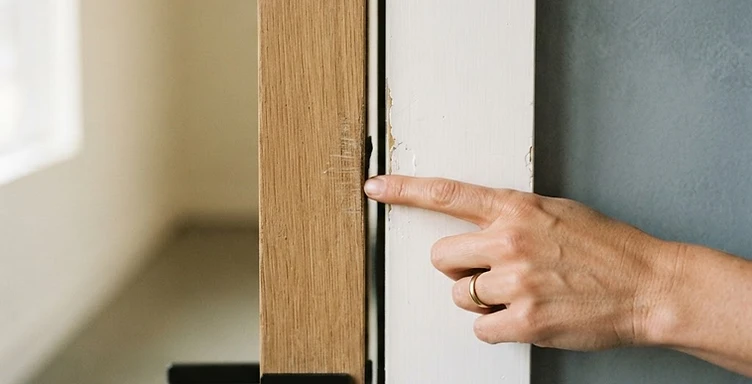
A sticking door usually doesn’t mean you need a new door. Start by figuring out where the door is rubbing, then check the hinges, screws, latch, frame, and paint buildup before reaching for sandpaper. Loose hinge screws are a common culprit. In humid weather, a wood door can also swell enough to rub the frame. Fix the cause first. Remove wood only if you actually need to.
Quick Answer
If a door suddenly becomes hard to close, don’t start sanding it.
Open and close the door slowly and find the exact spot where it makes contact. Then work through the likely causes:
-
Check the hinge screws. A loose hinge can let the door sag or shift in the frame.
-
Look at the latch and strike plate. If the door closes but the latch no longer lines up, the problem may be hardware alignment rather than the door itself.
-
Check for paint buildup. Several layers of paint around the edges can reduce the clearance.
-
Consider humidity. Wood doors can swell when moisture levels rise. This can be especially noticeable during humid Kansas City summers.
-
Look at the frame. If the jamb has shifted or the door has become badly misaligned, sanding the door won’t solve the underlying problem.
-
Only then consider sanding or planing. Remove as little material as possible and test the door repeatedly.
If you can identify the problem and it’s a loose screw or minor hardware adjustment, it’s usually reasonable DIY work. If you can’t determine why the door has moved, or the frame itself appears to be out of alignment, that’s a better job for a professional.
What Affects the Problem?
A sticking door isn’t one particular problem. Several things can produce the same annoying symptom.
What you notice
What to investigate
Door suddenly starts rubbing
Loose hinges, humidity, paint buildup or movement in the frame
Door rubs near the top on the latch side
Possible sag or hinge alignment problem
Bottom of door drags
Hinge/frame alignment, flooring or door movement
Door closes but won’t latch
Strike plate or latch alignment
Door sticks more during humid weather
Moisture-related swelling of wood
Several doors develop problems
Possible broader moisture, settling or structural issue
Door has been getting progressively worse
Frame movement, damaged hardware or another underlying problem
These are clues, not diagnoses. The location of the rubbing tells you where to investigate, but it doesn’t prove what’s causing it.
Door type matters
An interior hollow-core door isn’t the same repair as a solid wood exterior door.
A lightweight interior door may only need a hinge adjustment or minor trimming. A heavy solid-core or exterior door puts considerably more load on its hinges and frame. Exterior doors also have weatherstripping, locks and security hardware that can complicate the repair.
That’s why the first question shouldn’t be, “How much should I sand off?”
It should be, “Why did the door stop fitting correctly?”
Door material matters, too
Wood responds to changes in moisture. If a wood door works normally during dry weather and starts rubbing when humidity rises, seasonal swelling is one possibility worth checking.
This is particularly relevant around Kansas City, where humid summer weather can expose a marginal fit that wasn’t noticeable during drier conditions.
That doesn’t mean every summer sticking door needs to be sanded. If the door shrinks back when conditions change, removing a lot of material could leave you with a door that has an unnecessarily large gap later.
The condition of the frame can change the repair
Sometimes the door isn’t the problem.
A door depends on its frame and hinges staying in the right position. If the jamb has shifted, the hinges are loose, or the frame is no longer properly aligned, trimming the door may only hide the problem temporarily.
The same applies when the trim around the door is damaged or has been repeatedly modified. Trim itself usually isn’t what makes a door stick, but problems behind the trim can sometimes point to movement or previous repairs that need a closer look.
Hardware can be the whole problem
Start with the hinges.
This is one of the simplest checks and one of the easiest things to overlook. Loose hinge screws can allow the door to move out of position. Tightening the existing screws may be all that’s needed.
If a screw spins without tightening, the hole may be stripped. That’s a different repair. Simply driving another screw into the same damaged hole isn’t necessarily going to hold.
Also check the strike plate, the metal plate attached to the door frame that the latch enters when the door closes.
If the door physically moves freely but the latch misses the strike plate, don’t start cutting the door. The hardware may just need to be adjusted.
What about sanding or planing the door?
Sometimes that’s the right answer. It shouldn’t be the first answer.
Once you’ve ruled out loose hinges, hardware problems, paint buildup and obvious frame issues, a small amount of material may need to come off the edge of the door.
Use a hand plane or sandpaper for controlled removal. Work slowly. Check the fit after each adjustment.
The goal isn’t to create a big gap around the door. It’s to restore enough clearance for the door to open and close normally.
If the door is painted or finished, remember that removing material exposes unfinished wood. That edge may need to be primed and painted or otherwise sealed, particularly where moisture could reach it.
DIY vs. Hiring a Professional
Here’s a reasonable dividing line.
Repair
DIY?
Why
Tightening a loose hinge screw
Yes
Basic tools and low risk
Adjusting a strike plate
Usually
Straightforward if alignment is obvious
Removing minor paint buildup
Usually
Simple if you can identify the contact area
Light sanding of a door edge
Usually
Requires patience and repeated test-fitting
Repairing stripped hinge holes
Maybe
Requires knowing how to properly reinforce the hole
Replacing hinges
Maybe
More involved, especially with heavy doors
Significant door trimming/planing
Better for a pro
Easy to remove too much material
Correcting a misaligned frame
Pro
The underlying problem may be the jamb, not the door
Repairing a damaged exterior door/frame
Pro
Security, weatherproofing and alignment all matter
Diagnosing several doors that suddenly stick
Pro
Could indicate a broader problem
For a straightforward interior door, try the easy checks first. There’s no reason to pay someone to tighten a screw you can reach with a screwdriver.
The line changes when you’re guessing.
If you can’t tell whether the door, hinges or frame are causing the problem, repeatedly sanding different parts of the door is not a good repair strategy. At that point, having someone diagnose it can save you from creating a second problem.
Be particularly cautious with heavy doors, exterior entry doors, fire-rated doors and situations where the frame appears to have moved significantly.
Common Mistakes
Sanding before checking the hinges
This is probably the first thing to avoid.
A loose hinge can change the position of the entire door. Sanding the edge may make it fit temporarily, but you’ve removed material without fixing why the door moved.
Taking off too much wood
Don’t try to solve the problem in one pass.
Remove a small amount, test the door, and repeat if necessary. A door that is swollen during a humid spell may fit differently when conditions become drier.
Assuming the door is warped
A door can look like it’s the problem when the real issue is the hinge or frame.
Look at the gaps around the door. Are they reasonably consistent? Does the door sit squarely in the opening? Does it appear to sag when you lift or push on it?
Those observations are more useful than simply deciding the door “looks crooked.”
Ignoring a stripped hinge screw
If a screw won’t tighten, don’t keep turning the screwdriver harder. The threads may no longer have enough wood to grip.
That calls for repairing the hole or otherwise providing the hinge with a solid attachment point.
Fixing a seasonal problem permanently
If the door only sticks during humid weather, don’t automatically remove a large amount of material.
Figure out how much movement is actually occurring before making a permanent change.
When to Call Wingman
Wingman can help when a sticking door has moved beyond a simple screwdriver fix.
That can include diagnosing the problem, adjusting or replacing hinges, correcting minor alignment issues, repairing stripped hinge attachment points, adjusting door hardware, and making minor door-edge repairs when trimming is actually necessary.
A professional assessment makes particular sense when you’re not sure whether the door or frame is causing the problem. It’s also worth getting help when the door is heavy, the frame is visibly out of alignment, or you’ve already tried the obvious fixes and the problem remains.
The goal is to fix the reason the door is sticking, not just make the symptom disappear for a while.
If you’d like Wingman to take a look at a door that won’t close, rubs the frame, or no longer latches correctly, request an estimate and describe what the door is doing. A few details about where it sticks can help determine what needs to be looked at.
Final Takeaway
Before you sand a sticking door, find the rubbing point and check the hinges.
That simple diagnostic step can separate a five-minute adjustment from a much bigger repair. Loose hinge screws, hardware alignment, paint buildup, humidity and frame movement can all produce similar symptoms, so don’t assume the door itself needs to be cut down.
And if the problem is seasonal, pay attention to that pattern. A door that swells during a humid Kansas City summer may not need the same permanent adjustment as a door that’s rubbing because its hinges or frame have shifted.
WINGMAN SERVICES
Rather have Wingman do it?
Get a quote and let a pro handle it. Your weekend stays yours.