
Best Garage Storage Systems: How to Choose the Right One for Your Garage
Quick Answer
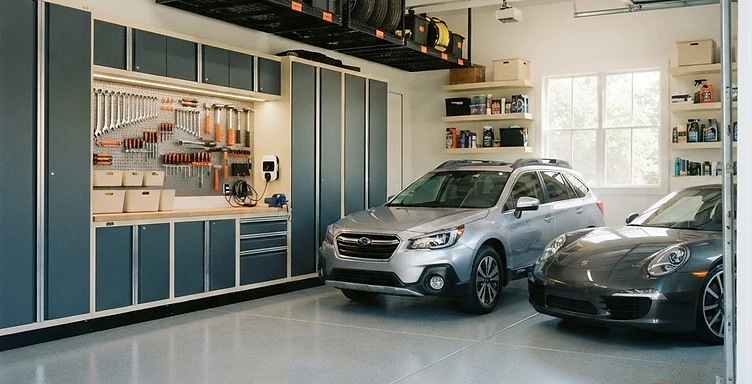
The best garage storage system depends on what you’re storing, how much floor and wall space you have, and how often you need to get to those things. Shelving works well for bins and bulky items. Cabinets hide clutter. Wall systems keep tools and equipment accessible, while ceiling storage makes good use of unused space in garages with high ceilings. For many garages, a combination works better than one system used everywhere.
Start With What You Need to Store
The biggest mistake is buying storage before figuring out what the garage actually needs to hold.
Take a look at what’s currently sitting on the floor, stacked in corners or shoved against the walls. Separate the things you use every week from the things you might pull out twice a year.
A garage that holds lawn equipment, bikes, tools and holiday decorations has different storage needs than one that’s mostly used for household overflow.
Think about storage in four basic categories:
-
Things you use often: Keep these easy to reach. Wall hooks, open shelving and accessible cabinets work well.
-
Bulky items: Shelving or dedicated hanging storage can keep these from taking over the floor.
-
Small items and tools: Cabinets, drawers, pegboard-style systems and wall organizers make more sense here.
-
Seasonal items: These are good candidates for higher shelves or overhead storage because you don’t need them every day.
This is also where a little planning pays off. If you simply add storage wherever you see an empty wall, you can end up with a garage that’s technically more organized but harder to use.
The Main Garage Storage Options
There isn’t one storage system that’s right for every garage. Each type solves a different problem.
| Storage type | Good choice when... | Watch out for... |
|---|---|---|
| Shelving | You have bins, boxes and bulky items to store | It takes up floor space |
| Cabinets | You want to hide clutter or protect smaller items | They cost more and take up a fixed amount of space |
| Wall systems | You have tools, bikes, yard equipment or other items that can hang | Installation and hardware matter |
| Ceiling storage | You have high ceilings and items you rarely need | Access and structural attachment need to be considered |
| Bin-storage units | You want flexible, movable storage for smaller items | Bins can become a mess without a labeling system |
Shelving
Shelving is usually the simplest place to start. It’s particularly useful for plastic bins, paint supplies, automotive products and other things that don’t need to be hidden behind doors.
The tradeoff is floor space. A deep shelf can hold a lot, but it can also make it harder to park a vehicle or walk around the garage.
Before buying shelves, measure the available wall depth and the clearance you need around your vehicles. A storage system that works beautifully in an empty garage may be a poor choice once two vehicles are parked inside.
Cabinets
Cabinets make sense when you want the garage to look less cluttered or you have a lot of small items that are difficult to organize on open shelves.
They also give you a place to keep things that you don’t necessarily want sitting in plain view.
You don’t have to buy brand-new cabinets, either. Upcycling existing or used cabinets can be a cost-effective way to add garage cabinetry, particularly when appearance isn’t the main priority.
The catch is that cabinets are less flexible than a few shelves or rolling bins. Once they’re installed, you’re largely committed to that footprint.
Wall Storage Systems
Wall-mounted systems are useful when you want to get tools and equipment off the floor without putting everything into cabinets.
Depending on the system, you might use hooks, shelves, baskets or other accessories to hold everything from hand tools to bikes and yard equipment.
The advantage is flexibility. You can change the arrangement as your storage needs change.
But don’t assume the wall itself will support whatever you hang on it. The mounting method needs to match the wall construction and the manufacturer’s instructions.
Ceiling and Overhead Storage
If your garage has high ceilings, look up before you start filling the walls.
Hanging or overhead storage can create useful storage space without taking up additional floor or wall area. This can be particularly helpful for seasonal decorations and other items you don’t need every week.
There’s a practical limitation, though: anything stored overhead has to be safely accessible. Heavy or awkward items aren’t good candidates if getting them down requires a precarious ladder maneuver.
Ceiling-mounted systems also need appropriate structural attachment. Don’t assume that because a rack is rated for a particular load, your ceiling can automatically support that load.
Bin-Storage Units
Large plastic bins are useful, but piles of loose bins aren’t really a storage system.
One approach worth considering is a wheeled 27-gallon-bin storage system. The advantage is that you can move the storage around the garage instead of permanently attaching cabinets to the walls.
That flexibility can be useful if the garage has to serve several purposes or if you expect your storage needs to change.
Label the bins. It sounds obvious, but a dozen identical black containers become frustrating quickly when you’re trying to find the Christmas lights six months later.
A Combination Usually Makes More Sense
You don’t have to choose between cabinets, shelves and wall storage.
For example, a two-car garage might use:
-
Cabinets along one section of wall for smaller tools and supplies
-
Open shelving for large storage bins
-
Wall-mounted hooks for bikes and yard equipment
-
Overhead storage for seasonal items
That arrangement keeps the things you use regularly within reach while moving less frequently used items out of the way.
The right combination depends on the actual garage. Door locations, windows, electrical equipment, the garage-door tracks, ceiling height and the amount of room needed to park vehicles all affect the layout.
This is one reason planning the space before buying anything matters.
What Garage Storage Costs
The price of a garage storage project can vary substantially because you’re not just paying for the storage product.
The major cost factors include:
Storage type. A few shelves are a different project from a wall of cabinets or a combination of cabinets, wall panels and overhead racks.
Amount of storage. More linear feet of shelving or wall storage means more material and usually more installation time.
Materials and quality. Better materials and hardware generally cost more. They can also make a noticeable difference in how the finished installation looks and how well it holds up.
Hardware and accessories. Hooks, brackets, baskets, bins, shelves and other accessories can add considerably to the cost of a system.
Labor. Assembly is one thing. Installing a large system, leveling it, securing it properly and working around existing obstacles takes more time.
Removal and disposal. If the garage already contains old cabinets, shelves or other storage, removing and disposing of them adds another part of the project.
Existing conditions. Masonry walls, awkward corners, outlets, windows and other obstacles can make installation more complicated.
Permitting. Most simple storage installations won’t necessarily involve the same requirements as a major renovation, but permitting requirements can depend on the work being done and the local jurisdiction. Check with the applicable municipality when the project goes beyond basic storage installation.
If you’re comparing quotes, make sure you’re comparing the same scope. One price might cover only the cabinets. Another might include delivery, assembly, mounting, old-storage removal and cleanup.
For a larger project, those differences can matter more than the initial product price.
How to Keep the Cost Down
You don’t necessarily need a completely custom garage.
A few ways to control the budget:
Keep existing cabinets when they’re usable. A fresh installation or some new hardware may accomplish what you need without replacing everything.
Use shelving where cabinets aren’t necessary. There’s little reason to put inexpensive storage bins behind expensive cabinet doors if you’re comfortable seeing them.
Use overhead space selectively. If ceiling height allows it, moving seasonal items overhead can reduce the amount of wall and floor storage you need.
Buy storage based on the things you actually own. Don’t spend money on accessories for equipment you don’t have.
Install in phases. You can organize the garage wall first, see what’s still causing problems, and add cabinets or overhead storage later.
Good materials and installation matter, too. A cheap system that’s poorly installed can look worse and perform worse than a simpler system installed correctly.
Common Garage Storage Mistakes
Buying everything at once
It’s easy to walk into a home improvement store, see a complete garage system and decide you need the whole thing.
Maybe you do. But don’t assume it.
Start with what is actually causing the problem. If the floor is covered with bins, shelving may solve most of it. If tools are scattered across a workbench, wall storage might be the better first move.
Forgetting about vehicle clearance
This is a big one.
Measure the storage depth and then test the actual space with your vehicles parked where they normally sit. Leave enough room to open doors and walk around them.
The goal isn’t to fit the maximum amount of storage into the garage. It’s to make the garage more useful.
Putting everything overhead
Overhead storage is valuable, but it shouldn’t become the default location for everything you own.
If you’re constantly climbing a ladder to retrieve something, it probably belongs somewhere more accessible.
Ignoring the installation
A storage system isn’t finished when the boxes arrive.
Wall-mounted cabinets, shelving and overhead systems need to be installed correctly for the particular wall or ceiling. Hardware matters. So does leveling.
A crooked row of cabinets is noticeable. A poorly secured one is a bigger problem.
Designing without thinking about the future
Your garage storage should have some flexibility.
If you add a lawn mower, another bike or a new set of tools six months from now, you don’t want every available space already committed.
DIY or Hire Someone?
A simple garage storage project is often reasonable to handle yourself.
If you’re installing freestanding shelves, assembling cabinets or adding a few basic organizers, the work may only require a tape measure, level, drill/driver and the appropriate hardware.
The job gets more complicated when you’re installing a large wall system, mounting heavy cabinets, working with masonry or installing overhead storage.
You’ll also want to think honestly about the physical part of the work. Large cabinets and long wall panels can be awkward to handle, even if the actual fastening isn’t complicated.
A professional makes more sense when:
-
The storage system is large or heavy
-
Several cabinets need to be aligned and secured
-
The wall construction is unusual
-
You’re mounting storage to masonry
-
You’re installing a ceiling-mounted system
-
The layout requires significant cutting or modification
-
You want help planning the entire garage rather than simply installing something you’ve already purchased
If you’re comfortable with basic tools and the project is small, DIY can save money. If you’re standing in the middle of a garage full of storage boxes trying to figure out where everything should go, paying for help with the layout may be money better spent than buying another shelf.
How to Choose the Right System
Before buying anything, answer these questions:
What am I storing? Make a rough inventory. You don’t need a spreadsheet. Just separate tools, bins, bikes, lawn equipment, automotive supplies and seasonal items.
What do I use every week? Those items should be easy to reach.
What can go up high? Seasonal decorations and rarely used items are obvious candidates.
How much floor space can I give up? This is particularly important if you park vehicles inside the garage.
How much wall space is actually available? Account for doors, windows, outlets and garage equipment.
Do I need enclosed storage? If you want the garage to look cleaner, cabinets may be worth the extra expense.
Will my storage needs change? If the answer is yes, a modular or movable approach may make more sense.
Am I buying storage or solving a storage problem? Those aren’t always the same thing.
That last question is worth asking before you spend the money.
When to Call Wingman
If you’ve already picked out a garage storage system and don’t want to handle the installation, Wingman can help with the installation side of the project.
Wingman can also be a practical option when you’re not sure how to make the best use of the available space. Planning the layout first can prevent you from filling one wall with cabinets and then discovering that your bikes, lawn equipment or vehicles no longer fit comfortably.
For a South Kansas City homeowner, the useful starting point is simple: look at the garage as a whole, determine what needs to be stored and decide what you want the finished space to do. From there, a storage installation can be scoped around the actual garage rather than around whatever system happens to be on sale.
If you’d like help turning your garage storage ideas into a workable project, request a Wingman estimate.
FAQ
What is the best type of garage storage?
It depends on what you’re storing. Shelving works well for bins and bulky items, cabinets are useful for enclosed storage, wall systems work well for tools and equipment, and overhead storage can make use of high ceilings. Many garages benefit from combining two or more types.
Are garage cabinets worth it?
They can be, particularly if you want to hide clutter or store smaller items behind doors. They aren’t automatically the best choice, though. If most of your storage consists of large bins, open shelving may provide more useful capacity for less money.
Is overhead garage storage a good idea?
It can be, especially in a garage with high ceilings and limited floor or wall space. It’s best suited to items that aren’t needed frequently. The ceiling structure, mounting method, weight and accessibility all need to be considered.
Can I install garage storage myself?
Often, yes. Freestanding shelves, basic organizers and some cabinet systems are reasonable DIY projects. Large wall-mounted systems and overhead storage require more careful planning and installation, particularly when substantial weight is involved.
Is it cheaper to build garage storage yourself?
Sometimes. Basic wood shelving can be inexpensive, but the comparison should include your time, materials, hardware, finish quality and installation. Off-the-shelf systems can also save time and provide a cleaner, more modular result.
Should I organize my garage before buying storage?
Yes. At minimum, sort out what you’re keeping and identify what needs to be stored. Buying storage first often results in buying too much of the wrong type.
Practical Takeaway
The best garage storage system isn’t necessarily the biggest system or the one with the most cabinets.
Start with the stuff you actually need to store. Keep frequently used items accessible, move seasonal items higher, use wall space for things that can hang, and don’t sacrifice vehicle clearance just to squeeze in another cabinet.
If the garage has high ceilings, use them. If flexibility matters, consider movable bin storage. And if the layout is complicated, get the plan right before buying the hardware. A little planning can save you from spending money twice.
WINGMAN SERVICES
Rather have Wingman do it?
Get a quote and let a pro handle it. Your weekend stays yours.